

Backyard hemp growing guide.
From notification to harvest. A four-step manual for backyard growers, now that hemp is finally free to grow in New Zealand. Read it once before you start, keep it nearby through the season.
The whole thing in four steps.
01 Get your seed
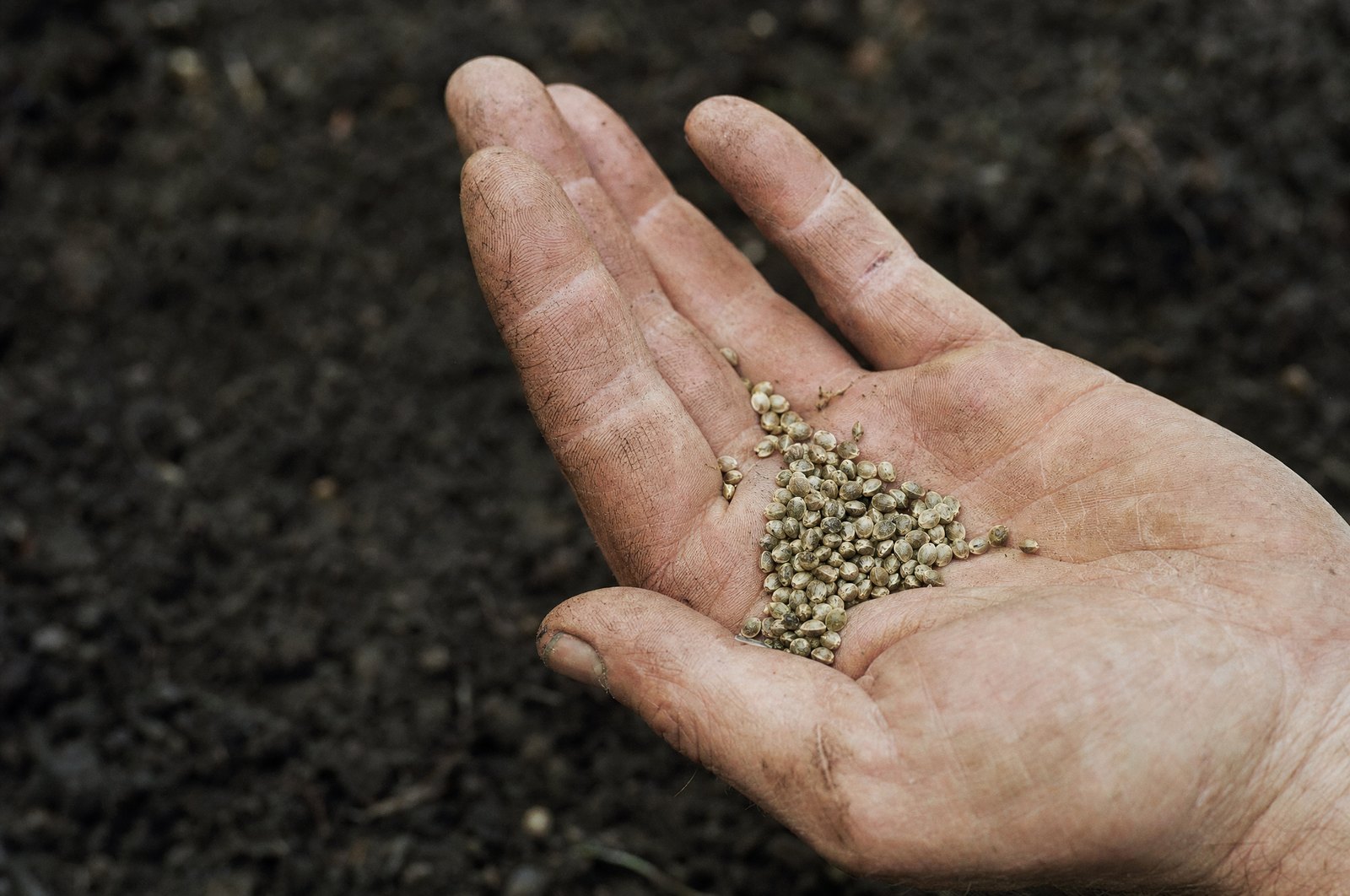
Certified hemp seed only. The Brothers Green releases growing seed in time for spring planting.
02 Notify Police and MPI
Download the Police form, fill it in, then send two short emails. Templates below.
03 Plant and grow
October to November planting. Site, soil, water, growth and flowering covered below.
04 Harvest in March
Cut, dry, thresh, store. Followed by the legal limits every grower should know.
A plant. Nothing more.
Strip away nine decades of bad press and hemp is, finally, just a plant. It germinates in a week. It grows tall and fast. It puts down a deep taproot and produces a seed head full of protein, fibre and oil.
The leaves give it away: five to eleven palmate fingers, the silhouette everyone thinks they know. The seed is the whole point of the operation. Same plant we've been pressing since 2017.
Get your seed.
Only industrial hemp can be grown at home without a licence. Seed from the grocery store won't do. You need certified hemp seed sold for growing.
Order your seed in August or September. Soil prep happens through September, and you'll want seed in hand and ready to plant by the first warm week of October.
- Certified industrial hemp seed
- Sold for cultivation, not food-grade hulled seed
- From a known, traceable NZ source
One form. Two emails.
Before you plant, you need to notify NZ Police and the Ministry for Primary Industries. For Police, download the hemp notification form, fill it in and email it to them. For MPI, it's a short email. Each notification lasts a year. No licence, no fee.
- Your full name and contact details
- Your home address
- Cultivation location, with a map if it's hard to find
- Nature and scale of the cultivation
Fill in the Police hemp notification form, then email it to hempnotifications@police.govt.nz.
- Your full name and contact details
- Your home address
Send to info@mpi.govt.nz. MPI may follow up with guidance on food safety, trade and animal welfare.
We wrote the emails for you.
Fill in your details once. Both emails update as you type. Nothing you type leaves your browser.
For NZ Police
For MPI
Site, soil, timing.
1. Site selection
- Full sun, at least 6–8 hours a day
- Well-drained soil
- Shelter from strong wind
- Loose, fertile soil with good organic matter
- Heavy clay soils
- Waterlogged areas
- Frost-prone low spots
2. Soil preparation Sep–Oct
- Remove weeds and grass
- Loosen soil to 20–30cm depth
- Add compost or aged organic matter
- Rake smooth
- General vegetable fertiliser
- Blood and bone
- Sheep pellets
- Compost
3. Planting time
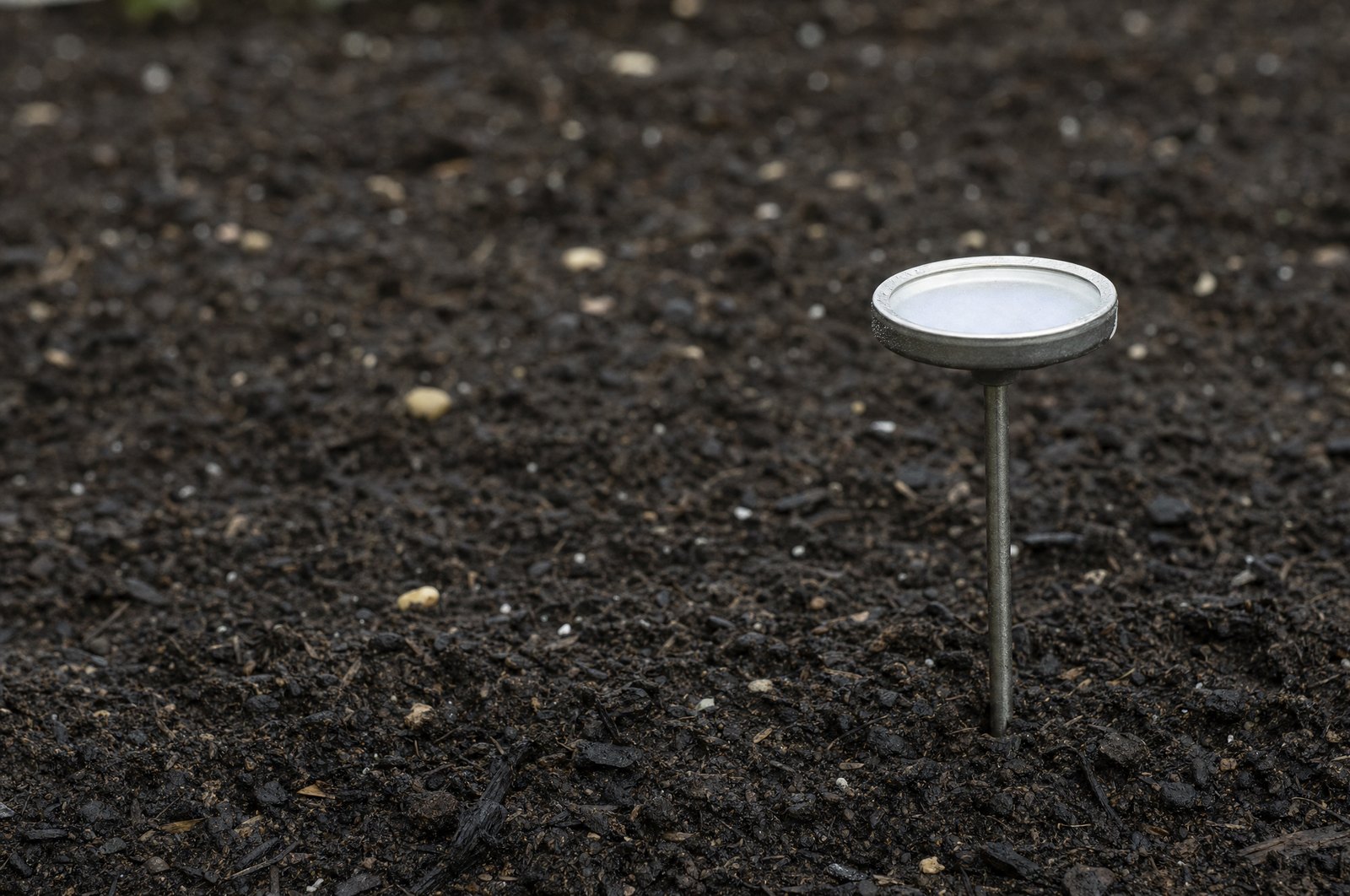
Best window is October to early November: warm soil, reduced frost risk. A simple soil thermometer in the morning gives you a reliable reading. Wait for three consecutive mornings above 12°C before sowing.
4. Sowing seed
Sow each seed 1–2cm deep, spaced 30–50cm between plants and 50–80cm between rows. The gap matters. It lets the plants branch, breathe and pour their energy into seed heads instead of fighting each other.
Water lightly after sowing: enough to settle the soil, not enough to drown the seed. Germination usually arrives in 4–10 days. If in doubt, less deep. Hemp wants to find the surface.
5. Water requirements
Consistent moisture during establishment, more water through summer (2–4 times a week in dry stretches), and a generous mulch layer around the base of each plant to hold it all in. Avoid waterlogging. Hemp hates soggy feet.
6. Growth stage Nov–Jan
- Plants may reach 1–3 metres tall
- Remove heavy competing weeds early
- Monitor for insect damage
- Strong upright stems
- Dense leaf canopy
- Vigorous summer growth
7. Flowering and seed development Jan–Mar
As daylight hours shorten through late summer, hemp shifts from vegetative growth into flowering, then seed development. Your job through this stage is to step back and protect the crop.
- Plants begin flowering
- Seed heads develop
- Seeds mature progressively over weeks
- Reduce heavy fertiliser use
- Maintain moderate watering
- Protect from birds if required
Cut, dry, store.
Everything you need on harvest day is probably already in the shed.
8. Harvest timing March
- Most seeds are hard to the touch
- Seed colour darkens
- Some lower seed drop begins
- Seed heads dry slightly
- Birds will find the seed
- Wind starts shaking it loose
- Mature heads shatter and drop
A few days early is far better than a few days late. Check the crop every morning from late February.
9. Harvest method
- Cut seed heads by hand with secateurs
- Place into buckets or breathable bags
- Move to a cool, dry area to finish drying
- Rub or thresh seed from heads by hand
- Remove excess plant material
- Winnow chaff away outdoors
10. Drying and storage
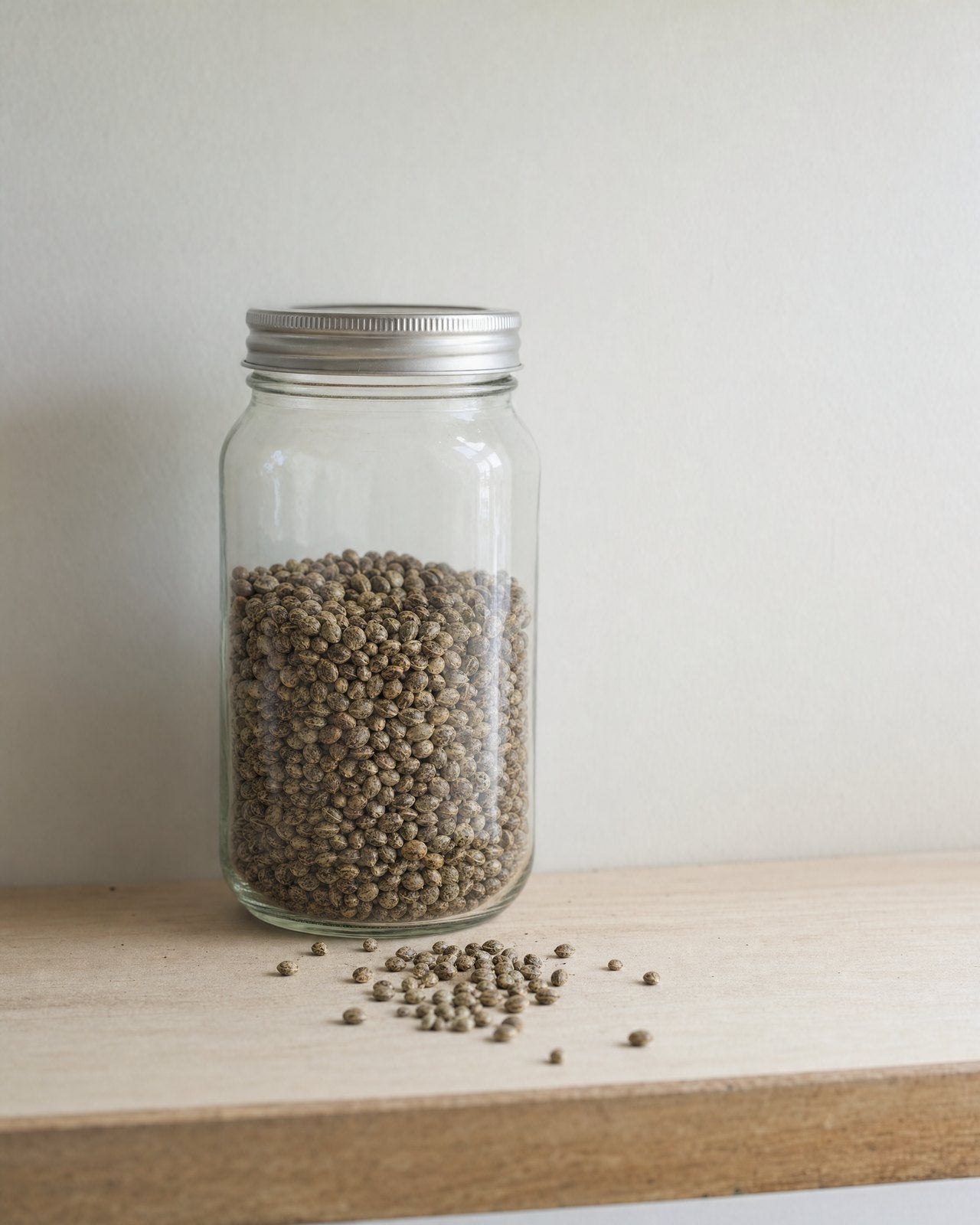
Dry seed thoroughly before storage. Target cool, dry conditions away from direct light. Properly dried seed lasts years. A pantry shelf will do. Cold storage extends it further if you're keeping seed for next season's planting.
- Glass jars with sealed lids
- Food-grade containers
- Airtight buckets
- Moisture, the number one killer of seed
- Heat
- Direct sunlight
Legal to grow. Simple rules.
Industrial hemp must comply with the Misuse of Drugs (Industrial Hemp) Regulations. Stay in the lane these regulations set, seed, fibre, food and gardening, and the law is on your side.
- Growing hemp from certified seed
- Eating the seed, whole or hulled
- Pressing seed for hemp seed oil
- Using as bird feed
- Fibre, gardening, education
- Personal lawful use
- Extracting cannabinoids
- Manufacturing concentrates
- Producing oils from flowering material
- Processing material for smoking or inhalation
- Making medicinal claims
- Growing anything other than industrial hemp
Seed commerce
Selling seed commercially, or importing and exporting it, may trigger additional approvals under seed and food regulations. If you plan to sell at the gate or at a farmers' market, check with MPI first. They're the right point of contact.
Grown for seed and fibre
Hemp varieties like Kompolti are bred for seed and fibre, and home growing is for exactly that: food, fibre, gardening and education. If you want to do more than that, there's a separate commercial licence, and it exists for exactly that reason.
Go plant something.
This is the short version. The full growing companion, with seed availability, regional planting notes and processing how-to, lands in your inbox over the season. In the meantime: notifications out, soil prepped, patch of dirt ready. The planting window is open now.
Brad and the TBG crew